

Navigating the ins and outs of life insurance can be overwhelming. And we get it! Insurance is one of those things that everyone needs, but most of us don’t fully understand and as a result, we end up putting it off. But when it comes to term life insurance, putting it off can cost you in more ways than one.
Let’s break down everything you need to know about term life insurance, including what it is and whether it’s the right choice for you.
What is Term Life Insurance?
Term life insurance is a form of life insurance that provides coverage for a set period of time—also known as the term.
During this time, if you pass away, your family and loved ones can receive a lump-sum payout to help ease any financial burdens. The goal of term life insurance is to help put your mind at ease, knowing that if you were to pass away, your family and loved ones have a financial safety net that they can rely on for things like education costs, mortgage or rent, and funeral costs.
With term life insurance, you typically choose a term that lasts anywhere from 10 to 30 years. Term life insurance is designed to provide financial protection during a specific period of time, when you may have higher levels of financial responsibility.
That’s why you’ll find that term life insurance is a popular choice for families when they have kids, mortgage payments, or other financial dependents.
How Does Term Life Insurance Work?
Life insurance often sounds complicated. But we’ll let you in on a secret: it’s actually much simpler than you might think—especially when it comes to term life insurance. But don’t just take our word for it. Let’s look at how term life insurance works in four easy steps
Buy Your Life Insurance Plan
Before you have life insurance coverage, you’ll need to shop around for a plan that meets your needs and your budget. Life insurance can be purchased through a broker, insurance agent, or even online.
As you choose your plan, there are a few things to think about, including:
- Term length: This is how long your insurance plan will be active. It’s common to see policies ranging anywhere from 10 to 30 years. However, depending on your age or your insurance provider, you might find options for shorter or longer terms.
- Coverage amount: This determines the size of the payout your beneficiaries can receive in the event of your death. This is also known as the death benefit. How much coverage you need depends on several factors, including your income, as well as your current and future financial obligations.
- Beneficiaries: This is who will receive the death benefit upon your passing. It’s common to see partners, children, or other loved ones listed as beneficiaries on life insurance policies.
Pay Your Rates or Premiums
Throughout the term of your life insurance plan, you’ll pay a fixed amount to your insurance provider. This is typically referred to as a premium, or your insurance rates. In order to keep your term life insurance plan active, you’ll need to continue to pay your premium. Generally, your premium will be given to you as a monthly dollar amount. This amount is determined based on your age and your coverage needs when you purchase your plan.
For term life insurance, everyone’s premiums will be a little bit different. Every insurance provider also calculates their rates a bit differently. However, there are some factors that can help you understand the variation in cost.
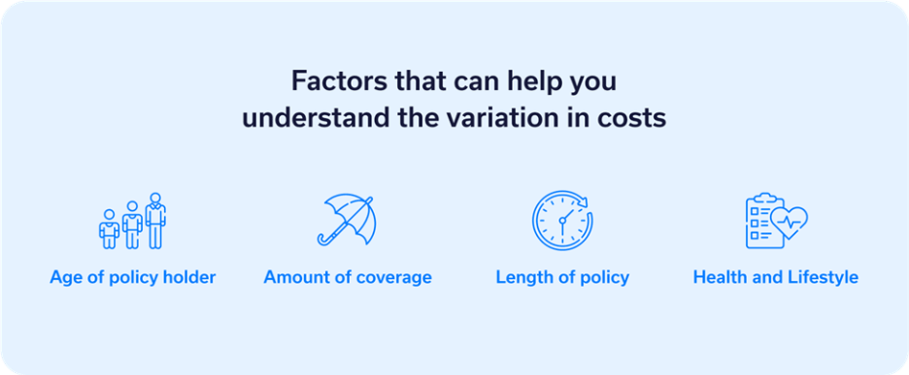
- Age: As a rule of thumb, the younger you are, the lower your term life insurance premiums. This is because as you get older, you’re more likely to experience health complications, making coverage riskier for insurance providers.
- Amount of coverage: Insurance premiums typically go up if you need a larger coverage amount.
- Length of coverage: Typically, the longer the plan, the higher your rates will be. The longer the plan, the larger your risk of passing while the plan is still active.
- Health and lifestyle: Some providers may ask questions about your current medical situation and any lifestyle factors that can impact your rates. For example, if you’re a smoker, your life insurance premiums will typically be higher than that of a non-smoker.
Remember: Honesty is key when it comes to your life insurance plan application. If your insurance provider discovers that you’ve misrepresented yourself, your plan can be cancelled, or your claim could be denied.
File a Claim
For many term life insurance plan holders, you’ll never file a claim.
If you’re still living by the end of your plan term, your coverage will simply come to an end. For example, if you have a 20-year term life insurance plan, but you’re still living after 20 years, your plan will lapse. Based on your life situation and financial obligations at that time, you can decide whether you want to extend the plan term, convert it to permanent insurance, or simply let it expire.
However, if you pass away while your plan is still active, your beneficiaries would need to file a life insurance claim. For example, if you have a 20-year term life insurance plan, but you pass away 10 years into the plan coming into effect, your beneficiaries would be eligible to submit a claim. The process of filing a term life insurance claim varies between providers. Typically, your beneficiaries will be required to provide documentation regarding your death and other necessary details to help review and settle the claim.
Most insurance providers have agents and adjudicators who can walk your loved ones through the claims process and ensure your loved ones have all the information they need.
Get Your Payout
Once your claim is settled, your loved ones will usually receive your death benefit in the form of a lump-sum payment. This amount is based on the coverage you selected when purchasing your plan. Term life insurance payouts are also tax-free, so your loved ones can make the most of the coverage.
Unlike mortgage insurance, which goes to the bank to pay off the balance of the mortgage, term life insurance payouts aren’t earmarked for a specific purpose. So, it’s up to your beneficiaries to decide how they’d like to use it.
Common uses include:
- Mortgage or rent payments
- Income supplements
- Tuition or childcare costs
- Funeral or burial expenses
- Future savings
When is Term Life Insurance the Right Choice?
Term life insurance might be the right choice for you if:
- You have a partner who relies on your income.
- You have kids with current (and future) childcare or tuition costs.
- You have financial dependents, such as elderly parents or minor children.
- You have outstanding debt, such as a mortgage or a large loan.
- You want to have financial security for future needs.
Get Term Life Insurance from CAA
CAA Term Life Insurance from Securian Canada is a great option to consider if you’re ready to start your plan. You can learn more about getting a quote on our website or talk to our team if you have questions. Call 1 (866) 714-9007 to get personalized advice!
If you’re a CAA Member, you’ll also enjoy the following benefits:
- Exclusive member pricing: Save 10% off your rates!
- Couples save an additional 10% off the first year.
- $10,000 in complimentary Child Coverage for each of your children.
We look forward to getting started with you!
Disclaimer: CAA Health & Dental insurance, CAA Term Life insurance and CAA Critical Illness insurance are underwritten by Canadian Premier Life Insurance Company. Securian Canada is the brand name used by Canadian Premier Life Insurance Company and Canadian Premier General Insurance Company to do business in Canada.
